
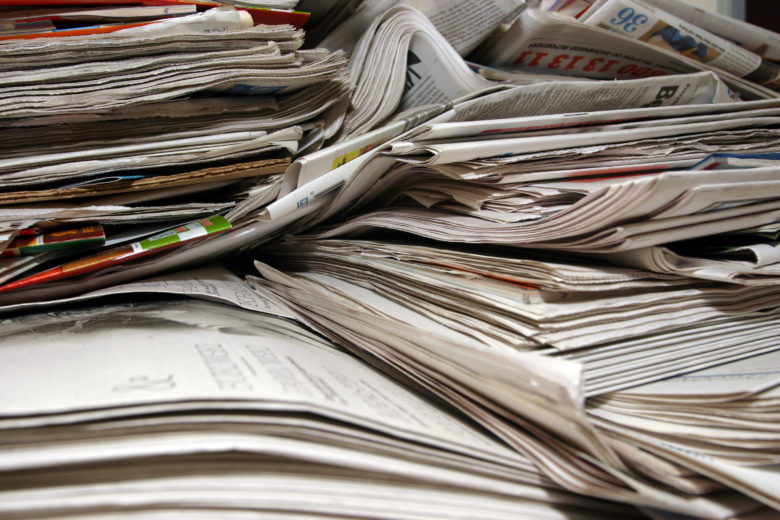
Paper is manufactured most commonly from the pulp of wood. To accomplish this, trees must be harvested and chipped, combined with water, pulped, dried, and pressed into thin sheets. The method of harvesting trees varies, with some being more sustainable than others, but every method uses some amount of this finite resource. Unlike other recyclables, paper fibers have a limited recycled life. Higher quality papers require longer fibers. The recycling and manufacturing process shortens the fibers and makes the recycled paper suitable for alternative and/or lower quality products. It is estimated by the EPA that manufacturing paper from recycled content requires only 60% of the energy it would take to manufacture the same product out of raw materials.
Learn about the recycled paper making process by watching this video:
You can also check out the EPA’s website to learn more about paper and paper recycling.
We use paper in some way every day. Office, notebook, and newspaper are common and can be recycled easily. However, paper products aren’t always for reading and writing. Consider some of these:
- Paper towels
- Paper plates and bowls
- Tissue
- Photographs
- Envelopes
- Masking tape
- Paper bags
Become more familiar with all the paper products you can recycle in your local program by calling your local recycling contact.